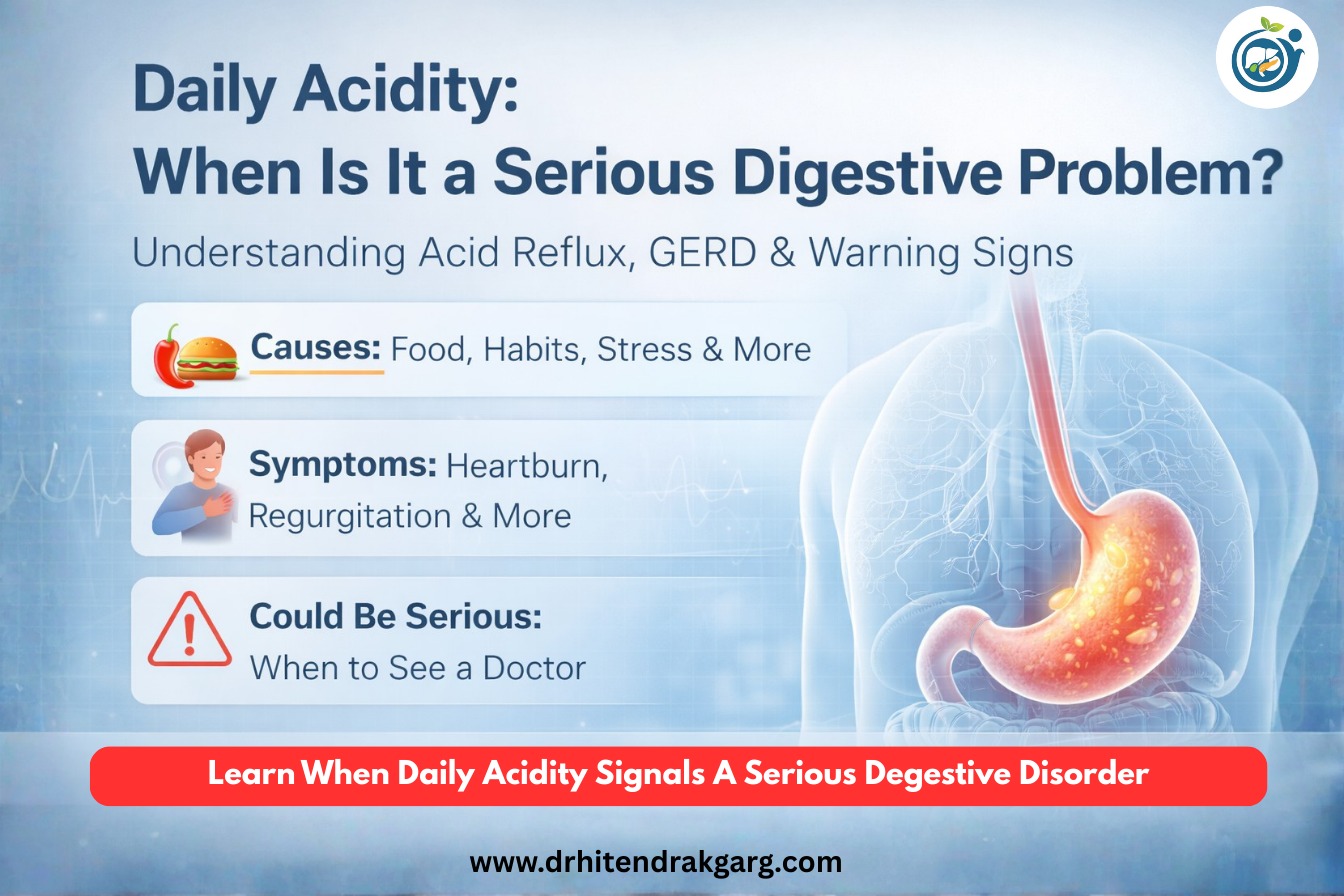

Acidity is one of the most frequently reported digestive complaints across the world. Almost everyone experiences acidity at some point in life — after eating spicy food, consuming a heavy or oily meal, drinking excess tea or coffee, or lying down soon after dinner. Because acidity is so common, it is often dismissed as a temporary inconvenience rather than a medical concern
However, when acidity begins to occur daily or almost every day, it should not be considered normal. Persistent acidity may indicate that the digestive system is under continuous strain. In some individuals, it can also be an early warning sign of a more serious digestive disorder that requires medical evaluation
This article provides a detailed, medically accurate explanation of daily acidity, its causes, its relationship with acid reflux and GERD, possible complications, diagnostic approaches, and evidence-based management strategies.
What Is Acidity?
Acidity refers to the presence of excess stomach acid or the backward movement of stomach acid into the food pipe (esophagus). The stomach naturally produces hydrochloric acid, which plays a crucial role in digestion. This acid helps break down food, activates digestive enzymes, and protects against harmful bacteria.
Under normal circumstances, stomach acid remains confined to the stomach. The inner lining of the stomach is specially designed to tolerate strong acid without injury.
A circular muscle called the lower esophageal sphincter (LES) separates the stomach from the esophagus. The LES opens when food passes into the stomach and closes afterward to prevent stomach contents from moving upward. When this valve functions properly, acid reflux does not occur.
Acid Reflux: The Core Mechanism Behind Acidity
When the LES weakens or relaxes inappropriately, stomach acid can flow backward into the esophagus. This backward movement is known as acid reflux. Unlike the stomach, the esophagus does not have a protective lining against acid. As a result, repeated exposure to stomach acid causes irritation, inflammation, and the characteristic burning sensation commonly described as acidity or heartburn.
Acid reflux is the primary mechanism behind acidity-related symptoms. Occasional reflux may be harmless, but frequent reflux can lead to chronic symptoms and tissue damage.
Occasional Acidity vs Daily Acidity
Occasional acidity is extremely common and usually not dangerous. It may occur after:
- Eating large, fatty, or spicy meals
- Drinking excess tea, coffee, or alcohol
- Skipping meals followed by overeating
- Eating late at night
- Lying down immediately after meals
These episodes are typically short-lived and improve with simple lifestyle measures. Daily acidity is different.
If acidity:
- Occurs more than two to three times per week
- Persists for several weeks or months
- Happens even after light or routine meals
- Disturbs sleep or daily activities
it should not be ignored. Frequent acidity suggests an underlying problem rather than a temporary dietary issue.
Is Daily Acidity the Same as GERD?
Daily acidity and GERD are closely related, but they are not identical.
- Acid reflux refers to the physical movement of stomach acid into the esophagus.
- Daily acidity refers to repeated symptoms caused by frequent acid reflux.
- GERD (Gastroesophageal Reflux Disease) is diagnosed when acid reflux becomes chronic and leads to persistent symptoms or complications.
GERD is considered present when reflux occurs at least twice a week for several weeks or causes inflammation, ulcers, or narrowing of the esophagus.
For a detailed explanation of GERD, readers may refer to:
What Is GERD: Causes, Symptoms, and Treatment
How Common Are Daily Acidity and GERD?
Daily acidity and GERD are increasingly common due to modern lifestyle patterns. Studies show that a significant percentage of adults experience frequent acid reflux symptoms.
Factors contributing to this rise include:
- Irregular eating habits
- Increased consumption of processed and fast foods
- Sedentary lifestyle
- Rising stress and anxiety levels
- Poor sleep patterns
Urban populations and working professionals are particularly affected. Importantly, younger adults are now experiencing chronic acidity more frequently than in the past.
Common Causes of Daily Acidity
Daily acidity usually develops due to a combination of factors, rather than a single cause.
1. Irregular Eating Patterns
Skipping meals, eating very large portions, or eating late at night increases stomach acid production and delays digestion. This creates favorable conditions for acid reflux.
2. Dietary Triggers
Certain foods are known to worsen acidity by increasing acid secretion or slowing digestion:
Adopting lighter meals and foods that are easier to digest can significantly reduce symptoms.
Easily Digestible Indian Foods
3. Tea or Coffee on an Empty Stomach
Caffeine stimulates acid production and irritates the stomach lining, especially when consumed without food. This is a common but overlooked cause of daily acidity.
4. Lying Down Soon After Eating
Gravity helps keep stomach contents in place. Lying down or sleeping soon after meals allows acid to move upward more easily into the esophagus.
5. Obesity and Weight Gain
Excess abdominal pressure pushes stomach contents upward and weakens the LES over time, increasing the risk of chronic reflux.
6. Stress and Sleep Disturbance
Stress affects gut motility and acid secretion through the gut–brain axis. Functional digestive disorders often overlap with acidity symptoms.
👉 Irritable Bowel Syndrome (IBS): Symptoms, Causes, and Treatment
6. Stress and Sleep Disturbance
Stress affects gut motility and acid secretion through the gut–brain axis. Functional digestive disorders often overlap with acidity symptoms.
7. Smoking and Alcohol
Smoking relaxes the LES and slows digestion. Alcohol increases acid production and irritates the digestive lining, making reflux more likely.
Medical Conditions Associated With Daily Acidity
In some individuals, daily acidity may be linked to underlying medical conditions such as:
- Hiatal hernia
- Chronic gastritis
- Delayed gastric emptying
- Inflammatory bowel conditions
Patients with chronic intestinal inflammation may experience persistent reflux symptoms.
👉 Inflammatory Bowel Disease
Symptoms of Daily Acidity
Symptoms of daily acidity may include:
- Burning sensation in the chest or upper abdomen
- Sour or bitter taste in the mouth
- Regurgitation of food or liquid
- Bloating and frequent burping
- Nausea or reduced appetite
- Chronic throat irritation, cough, or hoarseness
Symptoms are often worse at night, after meals, or while lying down.
When Does Daily Acidity Become Serious?
Daily acidity becomes concerning when it starts causing tissue damage or systemic symptoms. Warning signs include:
- Burning sensation in the chest or upper abdomen
- Sour or bitter taste in the mouth
- Regurgitation of food or liquid
- Bloating and frequent burping
- Nausea or reduced appetite
- Chronic throat irritation, cough, or hoarseness
These symptoms require prompt medical evaluation.
Possible Complications of Untreated Daily Acidity
If left untreated, chronic acidity can lead to several complications:
Esophagitis
Repeated acid exposure causes inflammation of the esophagus, leading to pain, ulcers, and bleeding.
Esophageal Stricture
Healing of repeated injury may cause scar tissue formation, narrowing the esophagus and making swallowing difficult.
Barrett’s Esophagus
Long-standing acid reflux can cause changes in the lining of the esophagus, increasing the risk of esophageal cancer.
How Is Chronic Acidity Diagnosed?
Doctors diagnose chronic acidity based on symptoms and may recommend investigations such as:
- Upper endoscopy to assess esophageal damage
- pH monitoring to measure acid exposure
- Imaging studies when anatomical abnormalities are suspected
These tests help determine severity and guide treatment decisions
Management and Treatment of Daily Acidity
Lifestyle Modification
Lifestyle changes form the foundation of treatment:
- Eating smaller, frequent meals
- Avoiding late-night eating
- Reducing spicy, oily, and acidic foods
- Maintaining a healthy body weight
- Managing stress effectively
- Elevating the head while sleeping
Digestive health is closely linked to liver function, which supports metabolism and digestion.
👉 Liver Function Tests: A Complete Guide
Medications
Doctors may prescribe medications to:
- Reduce acid production
- Protect the esophagus
- Promote healing of inflamed tissues
These medications should always be taken under medical supervision, especially for long-term use.
Can Daily Acidity Be Prevented?
In many cases, yes.
Early lifestyle correction, dietary adjustments, stress management, and timely medical consultation can prevent progression. One of the most common mistakes people make is self-medicating daily acidity for long periods without proper evaluation.
When Should You Consult a Doctor?
Medical consultation is recommended if:
- Acidity occurs daily or frequently
- Symptoms disturb sleep or daily routine
- Over-the-counter medicines provide only temporary relief
- Warning signs, such as swallowing difficulty, appear
Early diagnosis helps prevent long-term complications.
Conclusion
Daily acidity should never be normalized or ignored. While occasional acid reflux is common, persistent acidity is a signal that the digestive system is under continuous stress. Without proper evaluation, it may progress to chronic conditions such as GERD and lead to serious complications
With timely medical assessment, lifestyle modifications, and appropriate treatment, most people can effectively control acidity and protect their long-term digestive health.
About the Doctor
Dr. Hitendra K. Garg follows an evidence-based, patient-focused approach to diagnosing and managing digestive disorders, including chronic acidity and GERD. Timely evaluation can help identify the cause and guide effective treatment.